
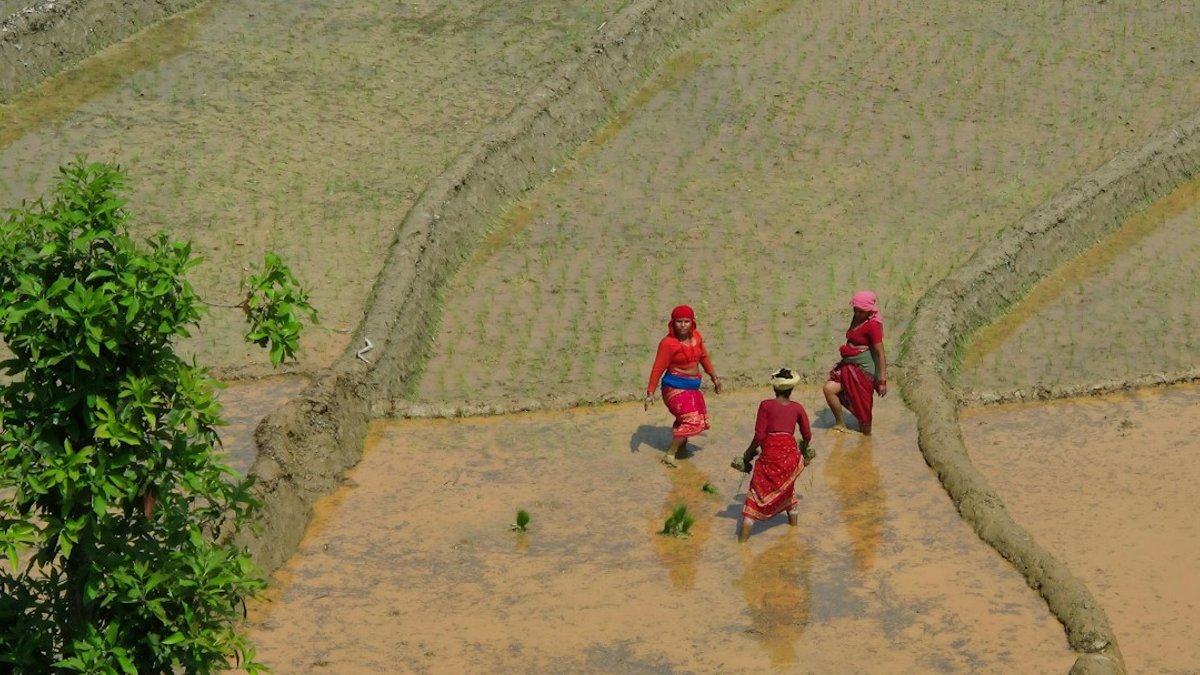
After the August 26 floods swept through Nepal’s Rasuwa district, the makeshift village of Khalte was completely submerged, erasing the homes that had been built there following the 2015 earthquake.
Survey finds missing answers
A joint team of officials from the government and NGOs arrived weeks later to record the damage. They asked residents how many family members were missing and the extent of loss to houses and fields.
What they did not ask was where the survivors wanted to rebuild or what support they needed, according to villagers who asked to stay anonymous.
One 37-year-old man, who lost his house and several relatives, said, “We want answers on what our future is.” He added that he may have to seek work abroad to afford a new home.
A 26-year-old woman expressed worry about raising her children without a permanent roof, telling reporters she feels uncertain about the coming months.
A 41-year-old resident, who has already moved twice since the 2015 quake, said, “Sometimes I feel that this village is cursed.” He is now staying in a tent-filled holding centre where the canvas leaks during rain.
Repeated attempts at relocation
After the 2015 tremor, roughly 300 households—about 250 of them displaced from other parts of Rasuwa—settled in Khalte as an informal relocation site.
Read Also: Hong Kong leads in AI and finance
A 2018 geo-hazard review by the National Reconstruction Authority labeled the spot as “at risk” and unsuitable for a planned community, a finding later cited in a 2021 research paper.
Authorities later suggested moving the population to the village of Tiru. When they surveyed 193 households, more than 82 percent said they preferred to remain in Khalte.
The August deluge destroyed the village and its surrounding infrastructure, forcing residents to look for another place to live.
Following the 2015 disaster, many families first moved to rented land in Naubishe, three hours’ walk away. When rent fell behind, the landowner evicted them, according to local reports.
The National Reconstruction Authority, created after the quake, bought land for a permanent site but made little progress before it was dissolved in 2021.
Subsequent hazard assessments across Rasuwa, Nuwakot and Kathmandu districts were criticized for not capturing evolving risks and for lacking clear relocation strategies or livelihood plans.
Earlier this year, a government report on a smaller Trishuli River flood identified Khalte as a high-risk settlement. Officials said they were preparing a new site when the late-August floods hit.
Read Also: Scientists Map Recharge Zones to Revive Kashmir Springs
Geology professor Khum Narayan Paudayal warned that moving people into flood-prone zones simply because land is available ignores the need for thorough watershed studies.
Given the pattern of short-term fixes, it is plausible that without a robust risk-mapping process, any future site could face similar exposure, leaving families to repeat the cycle of displacement.
Research published in World Development later found that villages flagged as unsafe, such as Lampat in Sindhupalchok and Bosimpa in Dolakha, still housed residents who received government subsidies, while many houses in the intended replacement sites remained vacant.
In 2021, a study noted that displaced families viewed the new settlement as a temporary monsoon shelter, keeping economic and social ties to their original homes.
After the recent floods, the National Disaster Risk Reduction and Management Authority led a rapid damage assessment, publishing findings within two weeks using satellite and drone imagery.
A draft bill from two ministries would amend land laws to require the state to provide alternative sites for landless households in high-risk areas, but the proposal has not yet been enacted.
The rapid assessment itself acknowledged that no household survey or community consultation was carried out, and it did not fully examine the housing, land or property concerns of tenants and undocumented residents.
Read Also: Biodiversity talks end with little progress
Institutional gaps in resettlement planning
Multiple ministries drafted a proposal to revise land legislation, yet the text has not been signed into law.
Without the amendment, authorities lack a clear mandate to relocate households occupying riverbanks, forests or road corridors.
The document highlighted priority actions but omitted systematic household interviews or key-informant discussions.
Consequently, the specific concerns of tenants, landless families and undocumented residents remained unaddressed.
Earlier assessments across several districts failed to incorporate evolving hazards, limiting their usefulness for long-term planning.
Ownership of homestead land became a prerequisite for receiving major housing grants after the 2015 quake.


