
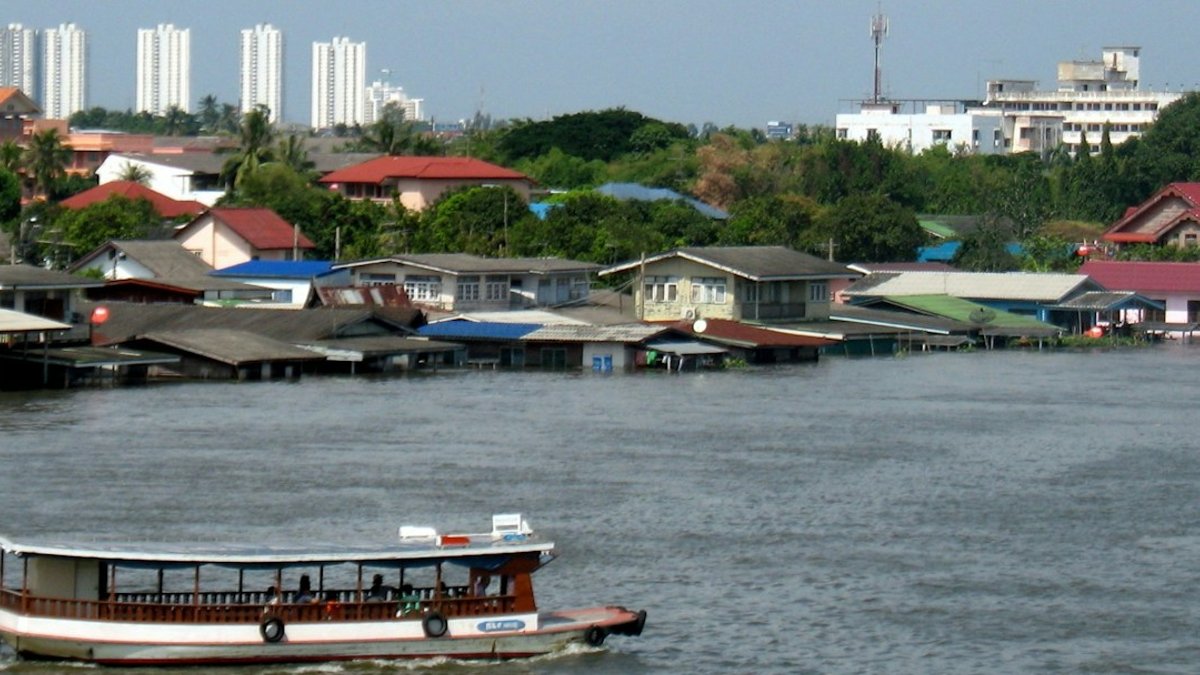
Bangkok is preparing for a major flood diversion project that could reshape how the city and its surrounding basin handle seasonal water. The proposed THB165 billion (US$4.91 billion) investment is being presented as a necessary step to protect the capital from future monsoon damage. However, the government’s willingness to spend is only the starting point; the real challenge is ensuring the money produces lasting results for both people and the natural environment.
Building a stronger relationship with the river
The Chao Phraya River has historically been the foundation of Bangkok’s existence, creating the plains and delta where the city now stands. The project’s goal must be to preserve these life-giving functions while reducing danger to residents. Effective protection for Bangkok requires safeguarding the natural processes that built its physical foundations.
Natural systems have a self-renewal capacity that engineered solutions often overlook. Vegetation regrows, seasonal flows refill wetlands, and sediment rebuilds land where conditions permit. With sufficient space and responsible stewardship, these biological cycles can significantly reduce the need for expensive, repetitive dredging, pumping, and structural repairs.
Other nations are shifting their approach. The Dutch Room for the River program, Germany’s floodplain restoration efforts, and similar initiatives in France illustrate a European trend away from pure confinement. In the United States, the Army Corps of Engineers’ Engineering With Nature initiative demonstrates how integrating natural processes into design can address the high costs of relying too heavily on control structures.
A government-led, inclusive comparison of options would demonstrate foresight and strengthen public confidence in the investments that follow. This process would be more than technical; it would give communities a direct role in shaping their future resilience.
Extreme rainfall drives the challenge, but the land’s condition is equally critical. Changes in catchments, roads, and drainage can concentrate runoff faster, while floodplain development removes spaces where water once spread and slowed. Climate change makes recovering that lost resilience more urgent than ever.
Healthy catchments naturally slow runoff. Wetlands and connected floodplains act as natural reservoirs, reducing flood peaks where storage is available at the right time and place. Bangkok’s Benjakitti Forest Park illustrates this principle’s practical value. There is significant scope to explore applying this model across the entire river basin.
Related Post: PalmPay Urges Customers to Use Verified Support Channels
Water is only half the river’s story. Flowing water and sediment together shape the depth, width, and bends of its channels. Floods carry sediment onto floodplains, replenishing soils and building land. This sediment eventually reaches the coast, helping sustain the delta and counter erosion. These connections explain why a change in one place can have consequences many kilometres away.
Dams and reservoirs illustrate complex trade-offs. While they can buffer flood peaks, they also trap sediment needed downstream. A reduced sediment supply can alter channels and deprive floodplains and coasts of the material required to maintain land elevation. By sustaining coastal land and wetlands, sediment also supports natural protection against waves and storm-surge impacts.
A Broader Vision for Resilience
For families and businesses affected by Thailand’s floods, the immediate focus is on safety, recovery, and confidence in a less challenging monsoon season ahead. The government’s commitment to investing in flood protection is positive. The key question is how to maximize the long-term benefits of this investment for both people and nature.
The recently announced THB165 billion flood diversion project presents an opportunity to think beyond a single structure and consider the future of the entire Chao Phraya basin. Thailand could use this moment to unite its best expertise and communities around a broader goal: strengthening the river as a partner in resilience.
Economic and Environmental Trade-offs
The benefits extend to food security and cultural preservation. Tropical rivers support remarkable fish diversity, much of which is under threat. WWF’s Living Planet Report 2024 noted an 85% decline in monitored freshwater wildlife populations since 1970. Healthy fisheries are vital for affordable protein, livelihoods, local markets, Thai cuisine, and tourism. Reports like The Forgotten Fishes and the Emergency Recovery Plan for freshwater biodiversity emphasize restoring habitats, flows, and connectivity.
Integrating Traditional Knowledge with Modern Solutions
A government-led assessment could bring together engineers, disaster-risk specialists, sediment and river experts, ecologists, economists, planners, businesses, and local communities. This collaboration would broaden the technical foundation and support agreement on future decisions. The focus would be on comparing proposed engineering works with natural storage and hybrid solutions, evaluating protection under future climate conditions, and assessing long-term costs and risks to other areas.
This process could shift the focus from traditional drain, dam, and dike approaches to a system emphasizing connectivity: linking rivers, floodplains, and surface and groundwater. Practically, this means maintaining pathways for water, sediment, and fish, providing safe spaces for floodwater to spread, and supporting wetlands and aquifers. Targeted engineering would ensure this system works safely for communities, balancing protection with natural processes.


