
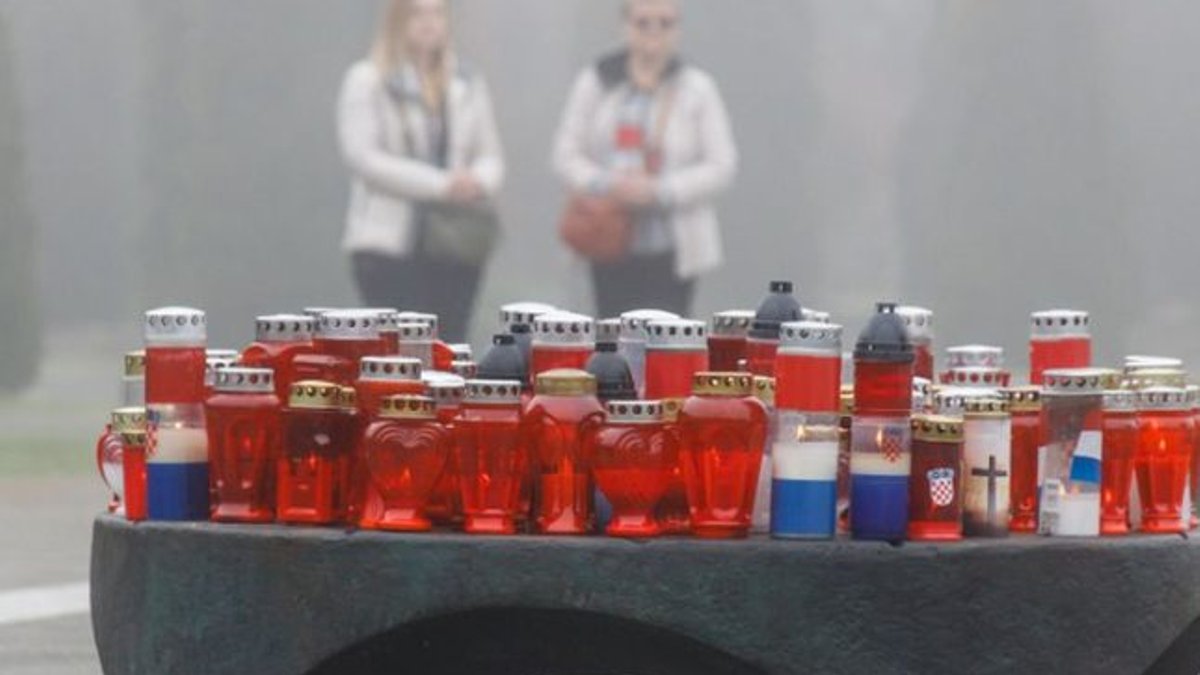
Croatia is still searching for 1,725 people who went missing or were killed during the Homeland War, 35 years after the conflict began. The search is ongoing, with hundreds of unresolved cases linked to Vukovar.
The Croatian Ministry of Veterans’ Affairs reports that searches for 21 missing individuals were finalized last year, while 343 sets of remains have been confirmed since October 2016.
Among those newly identified, 108 had been unidentified for years. These updates were shared just before the annual observances of Remembrance Day for the Homeland War and the Victims of Vukovar and Škabrnja, both marked on November 18.
Out of the 1,725 still missing, 320 are linked to Vukovar, representing the highest number of unresolved cases in any single Croatian city.
The Ministry says one of the biggest obstacles is the lack of reliable information about concealed burial sites. The passage of time has made investigations increasingly difficult, with potential witnesses dying and the locations of suspected graves significantly altered by construction, landfilling, and waste disposal.
False rumors and unverified accounts further hinder progress, though investigators have uncovered seven mass graves and over 45 individual graves. Since 2016, at least 235 sets of remains have been exhumed.
Read Also: Croatia eases language scholarship for diaspora descendants
Search efforts have covered thousands of square meters, with the densest clusters of missing persons and mass graves found in Vukovar-Srijem and Osijek-Baranja counties, where 72 graves have been located and 539 people remain unaccounted for.
In Sisak-Moslavina County—also called Banovina—44 mass graves have been discovered, while another 463 individuals are still missing. Between 2016 and 2026, investigators examined 453 sites, surveying over a million square meters of land.
One of the most demanding investigations is taking place at Petrovačka dola in Vukovar, where systematic searches have been underway since April 2022. The investigation has resulted in the discovery and final identification of the remains of 38 Croatian defenders and civilians, most of whom were forcibly taken from Vukovar in autumn 1991.
Prime Minister Andrej Plenković and Veterans’ Affairs Minister Tomo Medved visited the location earlier this month, saying investigators had to excavate to a depth of 17 meters to reach the remains. Medved said further work required the removal of additional accumulated waste, including hazardous material, before investigations could continue.
Croatia is seeking access to original military and other documentation relating to the collection, transportation, and burial of human remains, as well as their subsequent relocation. It is also requesting access to relevant archives and information from individuals who may have been involved in wartime burial operations.
The Ministry stressed that obtaining reliable information remains essential for families seeking answers about the fate of their missing relatives. As the search continues, Croatia intends to raise the issue through bilateral cooperation and Serbia’s European Union accession process, particularly Chapter 23, which covers the judiciary and fundamental rights.


