
Small oil palm farmers in Indonesia and Malaysia are forming volunteer firefighting teams to clear land without burning, a change driven by recurring wildfires and haze that endanger their livelihoods and health. The initiative depends on access to equipment, training, and support from larger producers, according to Guntur Prabowo, Head of Smallholders at the Roundtable on Sustainable Palm Oil (RSPO). One group used income from RSPO credits to purchase a tractor for shared land-clearing, reducing reliance on fire-based methods.
Haze forces families to fight for health
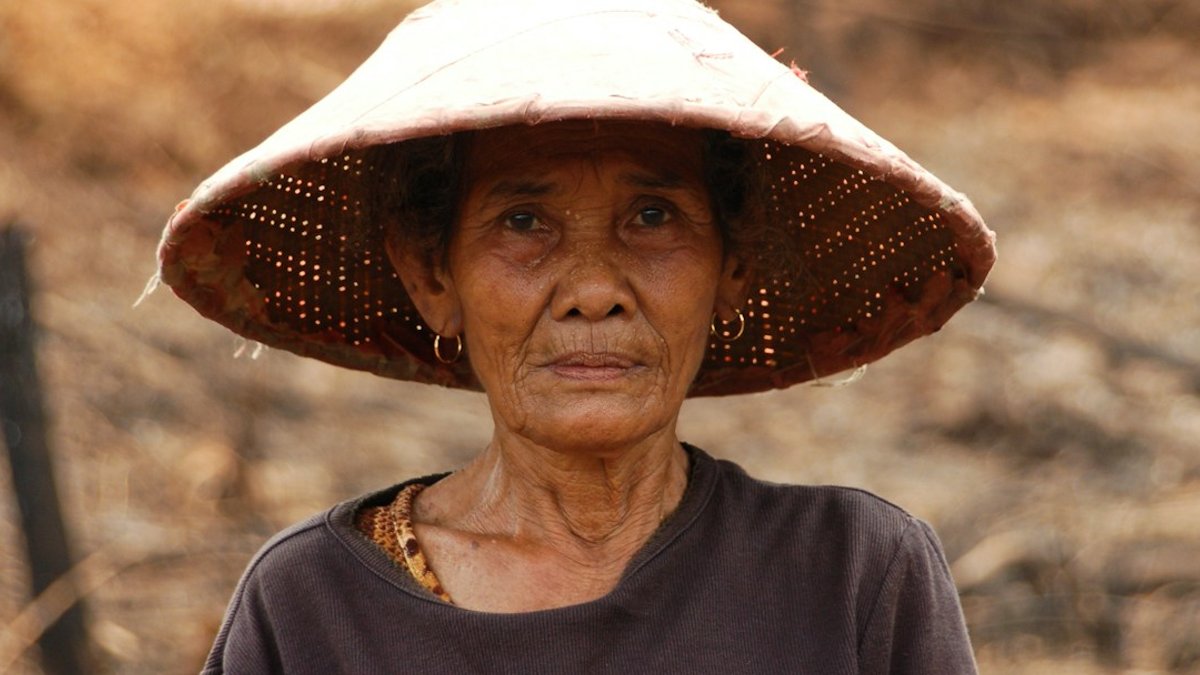
For farmers like Linella Pallai in Sabah, Malaysia, the consequences extend beyond protecting crops. Haze from Indonesian fires in neighboring Kalimantan forces her children to wear masks when outside and reduces visibility on roads, creating daily hazards. “Our children and grandchildren can fall ill,” she said, explaining how smoke disrupts even routine travel. Her 5.3-hectare farm lies near the border with Indonesia’s Kalimantan region, where wildfires have devastated large areas. Image: Aulia Erlangga / CIFOR, CC BY-SA 3.0, via Flickr. “We get worried about leaving the house, even just to go to the farm, because we’re afraid inhaling the haze will make us sick,” Pallai added, noting how the thick smoke lingers even during daylight hours.
Sustainable farming promises long-term advantages—reduced costs, higher yields, and improved income—but many smallholders lack the resources to implement these changes alone. Joseph D’Cruz, RSPO’s CEO, warned during the organization’s annual conference in Jakarta that expecting farmers to shoulder the full cost of sustainability will not rebuild credibility. He emphasized this point at the conference on 3 November, stating that the industry must share the burden rather than placing it solely on smallholders.
Read Also: Rich nations miss biodiversity funding targets
Certification brings progress, and new hurdles
Pallai joined the Wild Asia Group Scheme (WAGS) in 2012 and earned RSPO certification the following year. The program offers training, technical assistance, and certification support, while its SPIRAL initiative connects smallholders with industry partners. These improvements have allowed her to pay for her children’s education and purchase farm transport, though compliance introduces new challenges. Record-keeping, fertilizer use, and palm frond management add complexity for independent growers. Pallai first learned about WAGS through repeated village meetings and discussions with fellow farmers, while Wasrizan was drawn to the scheme after hearing about its partnership with a multinational palm oil buyer.
Wasrizan bin Basri, another Beluran farmer, inherited his father’s 1.2-hectare plot a decade ago and joined WAGS in 2016. Now certified, he helps other farmers handle certification hurdles, though the process demands years of accumulated knowledge. Prabowo emphasized that trust is essential, smallholders must first grasp sustainability’s benefits before adopting new practices. Unlike large plantations, they often rely on nonprofits, mills, and agencies for financing and training. He noted that certification typically takes two to three years, requiring “knowledge building, capacity building overall to even understand what sustainability is.” Image: Aulia Erlangga / CIFOR, CC BY-SA 3.0, via Flickr.
RSPO data indicates independent smallholders generated US$7.9 million through the sale of 387,342 Independent Smallholder (IS) credits in 2025, up 103,154 credits from the previous year. Beyond financial incentives, growers also need buyers willing to help them meet increasingly stringent sourcing requirements. As traceability and deforestation requirements tighten, Prabowo warned of “passive exclusion”: buyers favouring farmers already able to meet sustainability standards rather than helping others comply. He criticised sourcing policies designed “to reward those that are ready, rather than making them ready.” He said companies must do more than finance training and certification. They must also include smallholder production in their purchasing policies. For him, responsible palm oil means “you’re not leaving anyone behind.”


