
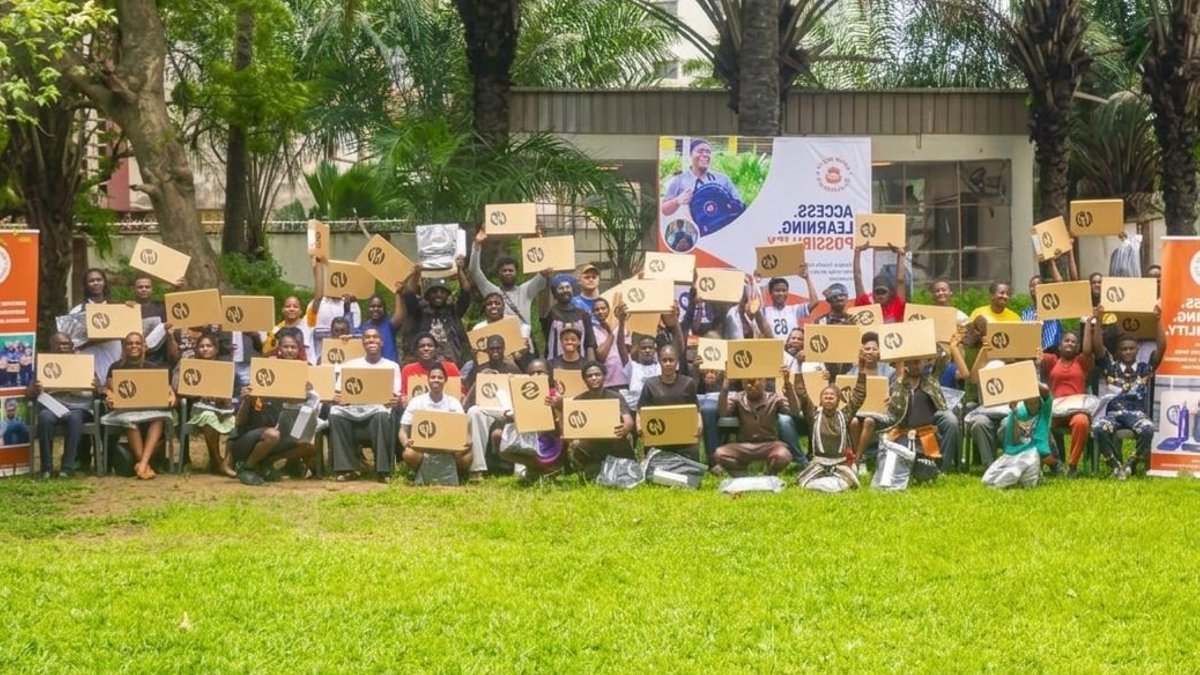
Joshua Peters, a 17-year-old founder of GiveBack Backpacks, is working to close the digital divide in Nigeria by providing young people with access to technology-led learning tools. Peters’ not-for-profit organisation has presented 200 HP laptops worth about $50,000 to young Nigerians, including girls displaced from Chibok.
The donation was unveiled at a Youth Empowerment Summit organised by the Society for Performing Arts in Nigeria (SPAN) in Ikoyi, Lagos. Each laptop came with a backpack, water bottle, educational materials, and technology aids, reflecting the organisation’s approach to combining digital devices with practical learning resources.
As digital skills become key for education and participation in today’s economy, many Nigerian students still struggle to access the necessary tools. GiveBack Backpacks aims to tackle this issue by providing technology and learning materials directly to young people.
Peters addressed students, teachers, and partners at the summit, stating that talent exists everywhere, but access does not. He emphasized that a young person’s potential should not be determined by the circumstances of their birth.
Closing the gap in digital learning
Peters’ initiative is rooted in the recognition that two equally talented students can face sharply different educational prospects because one has access to a computer and the other does not. That disparity matters as coding, data, digital design, online research, and digital media become increasingly important to how young people learn and prepare for employment.
GiveBack Backpacks aims to bridge this gap by providing computers and educational resources directly to students. The organisation views each laptop as a tool for ongoing learning rather than a one-time charitable donation.
With a laptop, students can engage with lessons, practice skills, conduct research, and develop ideas that could lead to productive work. Peters told the students that a laptop can be a classroom, a coding lab and a gateway to the digital economy.
Read Also: India probes Niger soybean imports for suspected mislabeling
A central focus of the programme is supporting young women whose education has been disrupted, particularly girls displaced from Chibok. Through its partnership with SPAN, GiveBack Backpacks is helping extend access to digital learning for these young women while also providing resources to other students with limited access to technology and school supplies.
Peters highlighted that these young women’s education and opportunities have been disrupted. While lost time cannot be recovered, he pledged to stand with them, invest in their future, and extend this support to other young people deserving of a fair chance.
A young founder’s technology drive
Peters founded GiveBack Backpacks at 14, driven by the belief that access to learning resources can shape a young person’s future. Now 17, he uses the initiative to reach students with talent and ambition but lacking the tools to explore their potential.
Peters encouraged students to use the resources for studying, creating, and helping others. He said, “Use these resources to study, to create and, when you can, to help someone else find their way forward.” The initiative aims not only to distribute equipment but also to inspire beneficiaries to use technology to contribute to their communities and expand opportunities for others.
The collaboration with SPAN provides an institutional partnership for the initiative, bringing together the society’s work in developing young Nigerian talent through the arts and GiveBack Backpacks’ focus on digital access. Peters thanked SPAN Nigeria for helping the organisation turn a shared belief into action.
Long-term impact and community engagement
The longer-term impact of the initiative will need to be assessed by whether beneficiaries develop digital skills, gain access to further opportunities and use those capabilities to produce benefits beyond the initial intervention. Peters expressed gratitude to teachers and supporters who continue to work with young people, acknowledging the importance of their role in the initiative’s success.


