
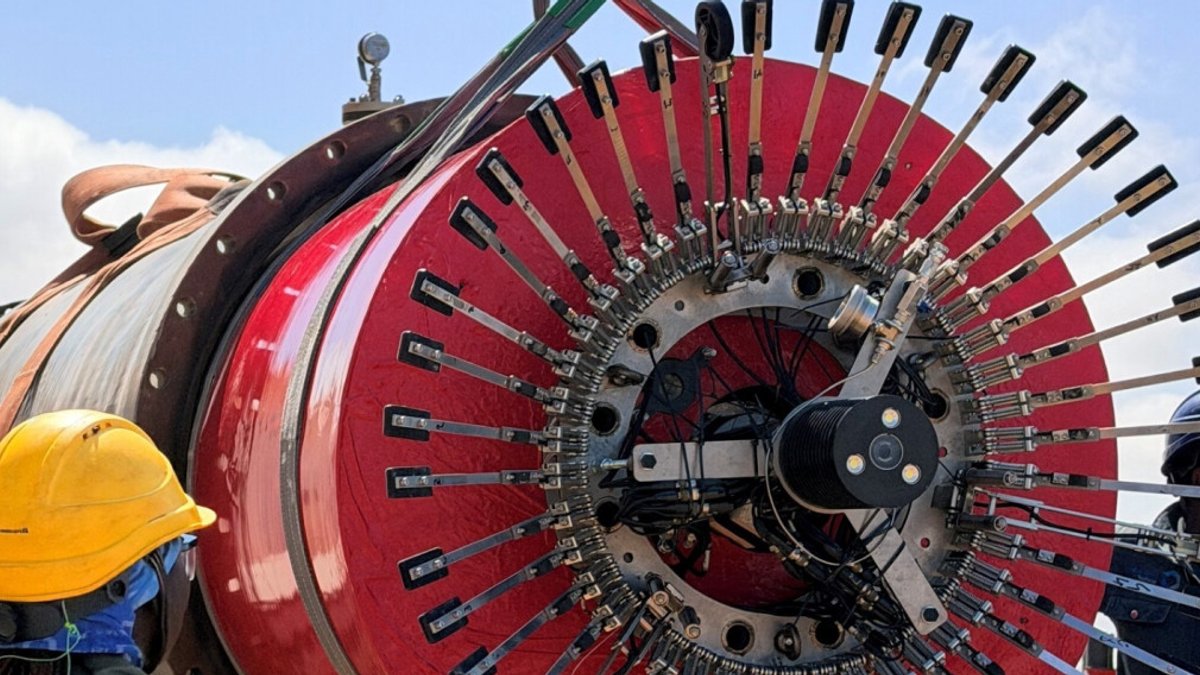
iNPIPE PRODUCTS, a North Yorkshire pipeline specialist, is targeting global growth after significantly improving flow rates at a desalination facility in Southern Africa. The company was brought in to clean two 1.2-metre-diameter seawater intake pipelines serving the reverse osmosis facility after extensive marine growth had restricted flow and increased pumping requirements.
The company developed a progressive cleaning programme using custom-built foam pigs, designed and manufactured at its 60,000sq ft North Yorkshire facility, to safely remove debris from the pipelines. This approach allowed for the efficient removal of marine growth without causing damage to the pipelines.
Improved Flow Rates
Following the work, flow through the northern intake line increased by more than 55 per cent, from 4500 to 7000 cubic metres per hour, while the southern line improved by more than 51 per cent, from 5200 to 7878 cubic metres per hour. These improvements demonstrate the effectiveness of iNPIPE’s cleaning programme.
Related: Sara Davies targets cheap tat on NotOnTheHighStreet
iNPIPE then deployed its Phoenix Debris Mapping Tool to assess the condition of the southern pipeline and verify the results of the cleaning programme. Using 39 calliper sensors, the technology collected more than 8.3 million measurements during a 12-minute run, providing detailed data on the pipeline’s internal condition.
Global Interest
The success of the project has since generated enquiries from desalination operators worldwide as the industry explores mechanical cleaning as an alternative to traditional chemical methods.
Reporters note that there is a growing recognition of the environmental impact associated with chemical cleaning methods and increasing interest in more sustainable alternatives. The results achieved on this project demonstrate how advanced pigging techniques can restore performance while minimising operational disruption.
Related: Founders Need to Track These Numbers
Simon Bell, managing director of iNPIPE PRODUCTS, said: “Desalination plants operate in extremely demanding conditions, and maintaining the performance of seawater intake pipelines is essential to ensuring reliable and efficient operation. “There is growing recognition of the environmental impact associated with chemical cleaning methods and increasing interest in more sustainable alternatives. “The results achieved on this project demonstrate how advanced pigging techniques can restore performance while minimising operational disruption, while Phoenix gives operators a detailed understanding of the condition of their assets. “The success of the project has generated interest from operators in other parts of the world and demonstrates the opportunities that exist for iNPIPE within the international desalination sector.”
Future Prospects
The company’s move towards a more integrated service combining specialist cleaning equipment and mechanical pigging with inspection technology and on-site technical support is expected to drive growth in the global desalination market.
They are well-positioned for growth.


